|
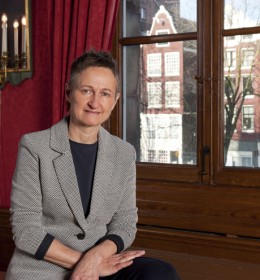
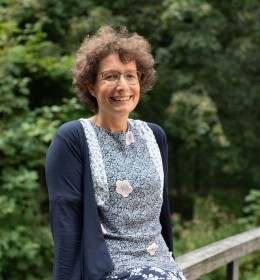
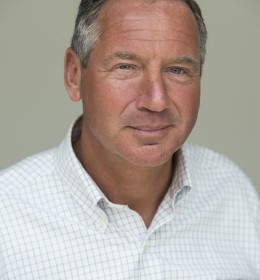
Assistant Professor at Utrecht University, Environmental Studies and Policy Section Managing editor of the International Journal of the Commons. What is the 'study of the commons', precisely? Not many people have a clear idea of what it means. They’re more likely to have heard of 'the tragedy of the commons', but basically, it’s a field of study devoted to understanding resources that are or could be used collectively. There are many such resources in the developing world, for example grazing lands, farmland, forest, community centres, and irrigation systems. But the developed world has them too. Some examples are the climate and the seas and oceans, but we might also consider new resources like open source software or knowledge as commons. We can study the underlying economy of the commons, the law pertaining to them, or their sociology or history. The interdisciplinary nature of the field was one of the reasons for publishing our own journal. Until now, publications resulting from the study of the commons have been scattered over many disciplinary journal outlets. We want to raise the field’s visibility by offering one thematic platform. Was the thematic relationship with the commons a reason for making your journal an Open Access publication? It certainly played a role, but our main aim was to publish a high-quality journal at a low price. Journals published by traditional publishers are almost unaffordable these days, leaving libraries with no money to subscribe to new ones. Their budgets are tied up in the long-term licences they have with the big publishers. So we decided to apply the 'author pays' model. 'Author pays'? That’s the name the big publishers have given it, but in reality it’s not the author who pays – his or her project or institute does. In our system, however, the author is made aware of the costs, whereas traditional journals make it seem as if publication is free of charge. I’m all for confronting authors with the cost of publication, by the way. Research costs money, after all, and part of the expense lies in publishing the results. We shouldn’t try to hide that fact. You said you wanted to publish a high-quality but inexpensive journal. How did you manage that? We wanted a journal based on 'double blind' peer review, with the quality of the review depending on the quality of the editorial board. That meant we had to get the very best people. (And they did: in October 2009 one of them, Elinor Ostrom, was awarded the Nobel Prize for Economics. [AvdK]) We recruited our candidates through the network and conferences of the International Association of the Study of the Commons (IASC), founded twenty years ago. Many of them were enthusiastic in particular because we had decided to apply the Open Access model, I think. Since the field of study itself concerns the sharing of resources, the Association was pleased to see the same approach being applied to research results. Another factor is that much of our knowledge of the commons is being developed and applied in the developing world. The Open Access model is much more suited to this than a model where you submit an article to a publisher in the West, which then reviews the article and, in exchange, blocks access to it. Thanks to the IASC’s support, we managed to recruit a team of about forty internationally renowned scientists and scholars in the field. Some of them are also on the editorial boards of prestigious traditional journals. We’re very proud of our editorial board. But Open Access publishing costs money too. How much does it cost, and who pays? Our second requirement was that the journal had to be self-financing – in other words, it shouldn’t have to rely on external funding. Igitur, Utrecht University’s publishing unit, gave us a lot of help with that. They run the entire publishing process using the Open Journal System, open source software developed in Canada. It’s usually a trouble-free process, although it could stand to be a bit more user-friendly for editors. Guest editors, who only use the system now and again, sometimes have trouble with it. But our entire operational budget amounts to less than EUR 6,000 a year, including what we pay Igitur and the copy editor. Of course, we can’t afford any marketing or branding activities, for example attending and sponsoring related conferences, publishing glossy brochures, lobbying, and so on. And both managing editors – myself and a colleague in Norway, Erling Berge – and all our reviewers do their work for nothing. But that’s often the case for traditional journals too. I see it as a professional duty in my role as a scientist. It amounts to an average of 1/10 FTE, often working in the evenings or weekends. Of course, I have something of a personal stake in this work. For one thing, I care deeply about the subject, and for another it naturally looks good on my CV. I don’t see myself continuing on this basis forever, but even if I’m compensated for my work at some point, the fee won’t amount to much. As for the reviewers, they get very busy when reviewing a submission, but the work doesn’t take long and they have no duties beyond that. We charge a page fee of USD 15 per page, and USD 10 if the author is an IASC member. Articles average about twenty pages, so the overall charge is USD 200 to USD 300 per submission. If that’s a problem, for example if the author lives in the developing world, then we grant an exemption. This system allows us to cover all our operating costs. We did receive start-up funding from the Association, amounting to USD 12,000 in two equal instalments. But however you calculate the cost per article in the old system, we’re many times cheaper. So that explains the price. Now what about the quality? Until now we’ve only published theme issues, or 'special issues' as we call them, with two specialists as our guest editors for each issue. We’ve published a total of four issues so far, each one consisting of five to eight articles and an editorial. We’re now starting to publish issues that don’t only deal with a specific theme. In the beginning, we received a huge flood of submissions from master’s degree students and a lot of articles that had been rejected elsewhere. We rejected them all. We wanted to set a very high standard of quality right from the start. We haven’t been assigned an official impact factor yet, although we will apply for indexation with ISI- the organization that calculates and publishes these impact factors - before the end of the year. We have also submitted an application with Scopus, the other big indexation organization. According to our own calculations using Google Scholar, we have an impact factor of 0.73. It’s not that high yet, but it’s certainly not negligible. It normally takes a few years before a journal has established itself in the academic world. The same holds for traditional journals. In fact, Open Access journals generally establish themselves more quickly than traditional ones, because the number of citations is naturally higher. It normally takes a few years before a journal has established itself in the academic world. The same holds for traditional journals. In fact, Open Access journals generally establish themselves more quickly than traditional ones, because the number of citations is naturally higher. |
We also measure our impact by looking at the number of full-text downloads. There have been about 20,000 downloads since we launched the journal, which is a lot. Downloads and citations are actually measures of two different things. Citations are a measure of scholarly impact. Downloads also measure public impact, for example practitioners who make use of our journal as an expert resource but who don’t publish themselves. Readers can also register on our website and receive e-mails notifying them of new issues and other news. About 1200 readers have now registered, from all over the world. So the future looks bright? We have a long way to go. Authors – particularly young ones – have to make a name for themselves. Some young researcher who has written a fantastic article has to choose between publishing in an established, authoritative journal free of charge or publishing in a start-up journal at his project’s expense. She won’t have to think about it for long. I’d do the same. So we have some explaining to do – specifically, that 'free of charge' isn’t really free of charge at all, because the library foots the bill, and that access to that prestigious journal is actually pretty restricted. Authors find the idea of publishing in a special theme issue appealing. Publication is also financed directly through a larger project, so that per-article payment isn’t an issue. We don’t always have the time to explain all this, however, and we’re not there when the decision is being taken. If would really help a lot if research funding bodies simply made open access publication compulsory. That would benefit the communication of research results by keeping the price down and making the results more easily accessible. Interview by Leo Waaijers and Annemiek van der Kuil on 29 September 2009. Photography by Annemiek van der Kuil. |